
Gaming at CES: 5 Key Developments for 2026
Mobile chips that can game, OLED everywhere, cloud gaming gets better, and cheating might get weird.News

While CES 2026 has a massive focus on AI, I’m happy to report there's also a lot of gaming news. Most of the gaming tech this year is a bit more iterative, as there are no big GPU announcements, there are a few big things coming down the pipeline that have the potential to make an even bigger splash in the hobby.
Integrated graphics are ready to game
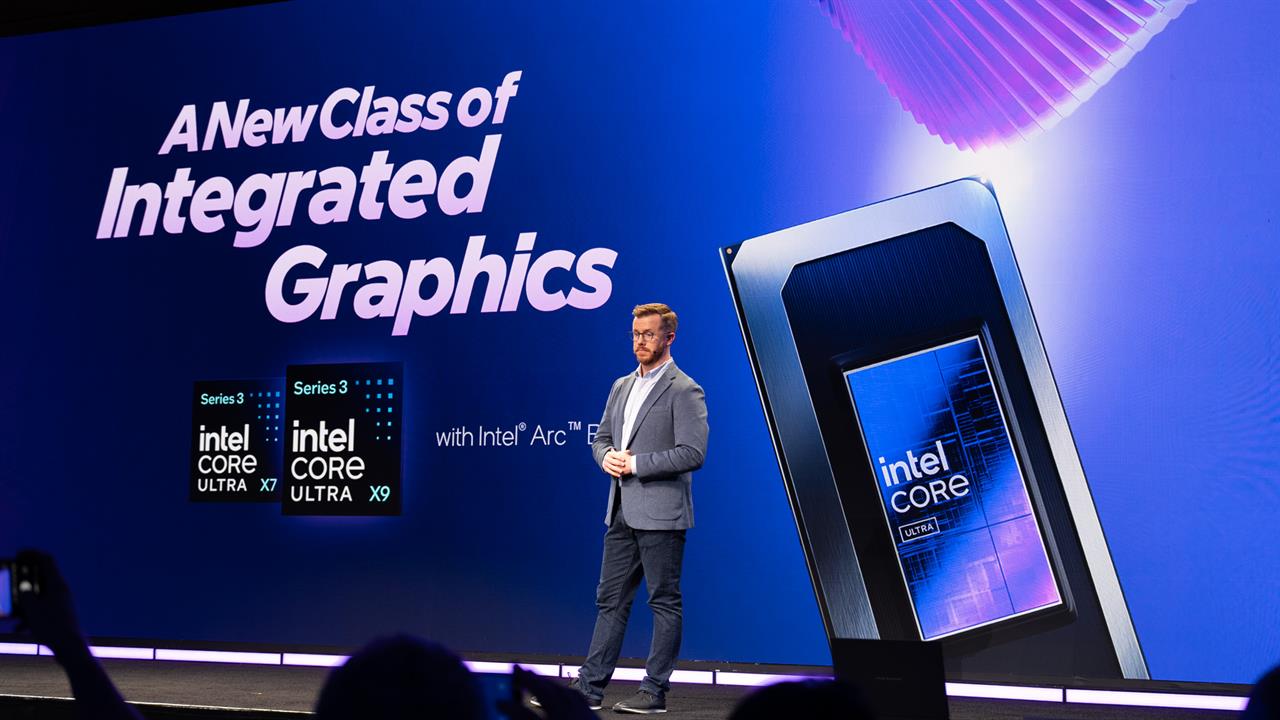 Photo: Jacob Bobo
The Intel Keynote was a fantastic look at their upcoming chips, but when the company showed off Battlefield 6 running at Overkill settings nearing 60FPS (57, to be exact) on integrated graphics without AI upscaling, I sat up. That’s not esports level gaming, but it’s more than enough to have a good time when you’re traveling with your business laptop.
That level of performance, equal to mainstream discrete GPUs of last gen, according to an Intel rep, is possible with the top-of-the-line Core Ultra Series 3 and its 12 Xe3 GPU chip. Speaking to the Intel team on the show floor, it’s clear the entire GPU-enabled lineup has been designed with gaming in mind.
I’ve long complained that my 2012 college gaming laptop was far too big to be useful. This new generation of processors absolutely blows it out of the water in both size and power (it's all relative – the GTX 660 tucked in the old girl wouldn’t have come close to running top-of-the-line 2012 games at that quality). The upcoming laptops I saw running Core Ultra Series 3 were slim, light, and professional looking; perfect for lugging to class or blending in at the conference table.
Integrated graphics with this kind of power has the potential to be a massive boon to mobile gaming and could shift what gamers focus on when picking a new device. Instead of reaching for that big gaming laptop, gamers could get by with slimmer, easier to carry laptops.
OLED panels are going to be everywhere
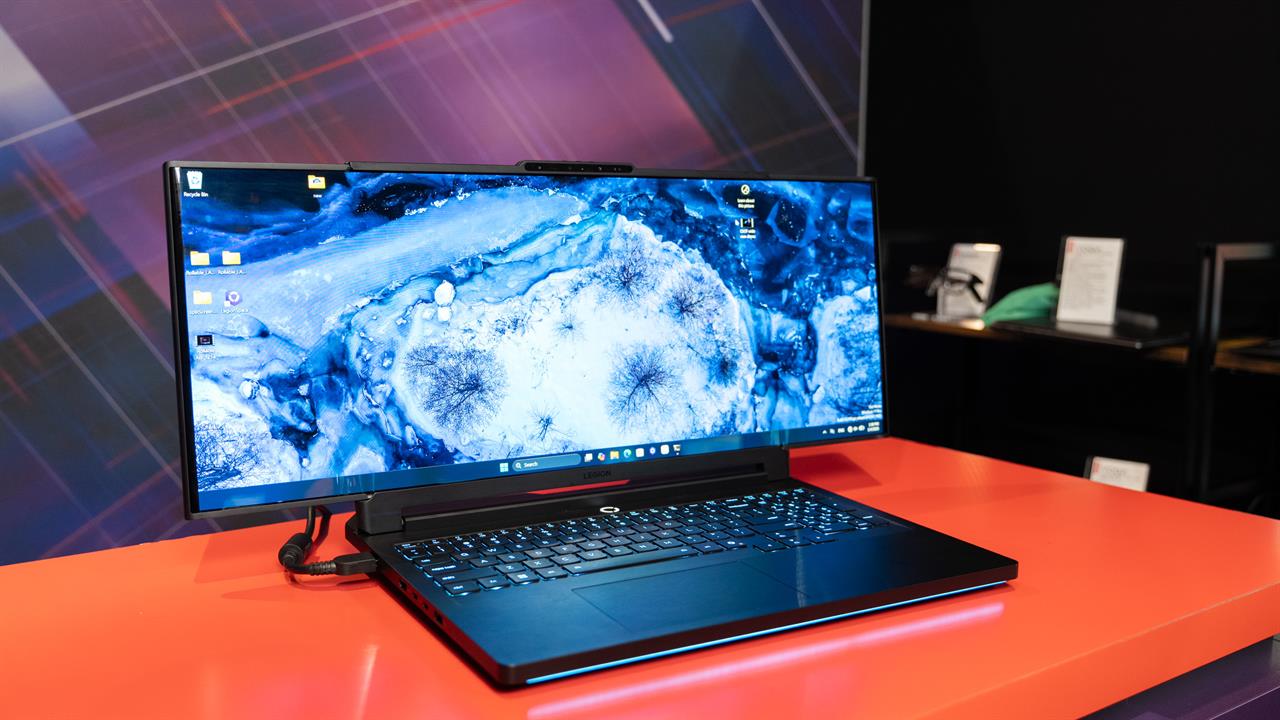 Photo: Jacob Bobo
I was an OLED skeptic for a long time. I knew they were gorgeous displays, but I didn’t know how much impact the technology would have on my gaming experience until I got an OLED Nintendo Switch. The deeper colors and true black levels elevated my experience with Metroid: Dread so much that, within a year, I had an LG C4 as my main TV. This is all to say I am very excited to see the technology begin to spread more and more into the laptop market.
While OLED panels have been around for a few years now and can be found in plenty of gaming monitors, after speaking to ASUS, ACER, and Lenovo all three companies are putting OLED panels in more and more laptops. Lenovo even used an OLED screen in their new rollable gaming laptop prototype.
That's all absolutely fantastic news if you want your games to look as best as they possibly can and, let’s be honest, who doesn’t? There's still room for improvement in areas like full-screen brightness and power efficiency, but if you haven’t had the opportunity to try gaming on an OLED display, 2026 may be your year.
Cloud gaming continues to grow
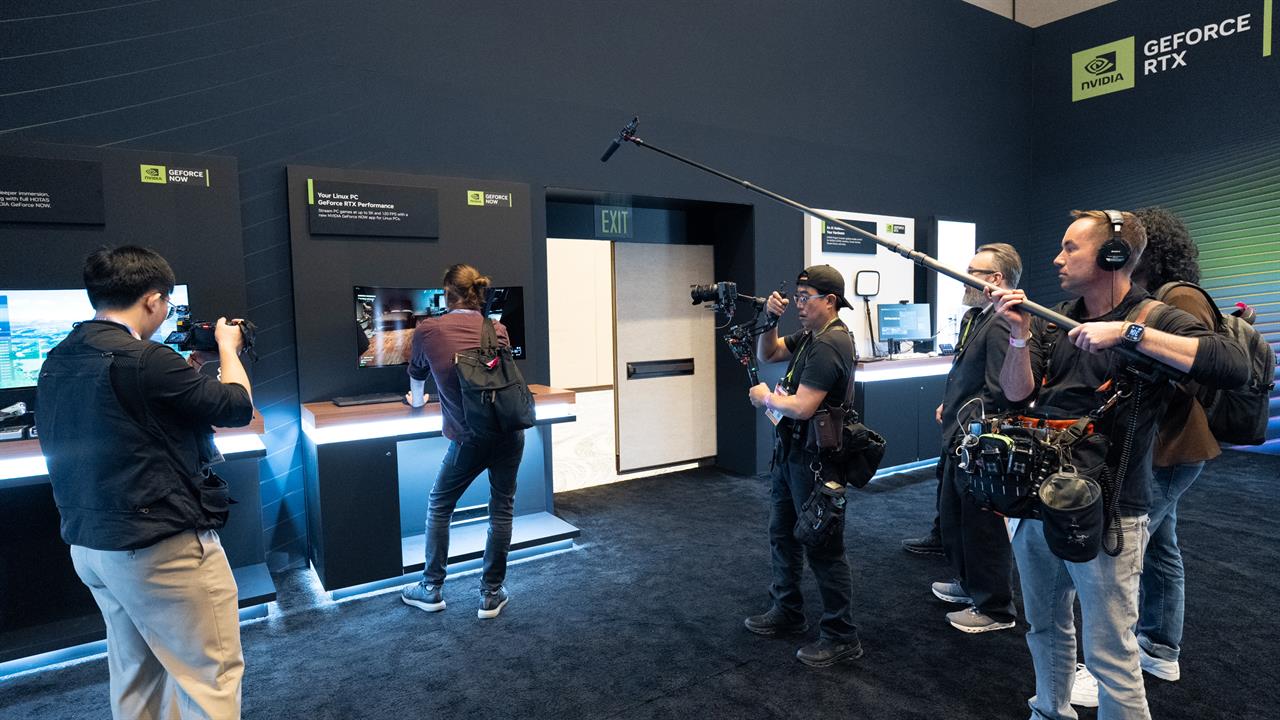 Photo: Jacob Bobo
I talked about cloud gaming at CES 2025 and 2026 shows that there is no slowing down. Not only is cloud gaming coming to more platforms, but we're seeing more hardware designed specifically for cloud gaming.
NVIDIA’s GeForce Now is continuing to expand, bringing native apps to both Linux and Amazon Fire TV. While the Amazon Fire TV is going to be great for anyone looking for easy gaming, the Linux app is what’s really interesting.
You absolutely can already game on Linux – SteamOS is Linux based, after all, and on every Steam Deck – but bringing GeForce now to Linux opens up the operating system to games that are either unoptimized for or just won’t work on Linux, like Battlefield 6, which I got to demo. And let me tell you, even on a hotel network, it ran buttery smooth. Gun fights felt responsive and snappy and I never noticed any latency. The Linux app will even support certain flight sticks and expanded support for more racing wheels, so you can soar through Flight Simulator 2026 from your home cockpit. Previously, your only option was to access GeForce Now via a web browser, which locked out some of the more advanced features like higher resolutions and HDR.
But it’s not just software. Razer is introducing the Wolverine V3, a controller designed specifically for TV-based cloud gaming. While it will connect to just about any TV with Bluetooth – and features a super-cool IR-based built-in remote control – when paired with the latest LG TVs, it has a sub-3ms response time, helping to keep latency, lag, and frustrations low. Right now, LG TVs from 2025 on are the only ones that support the special ultra-low-latency Bluetooth this controller uses, but as more devices add ULL-BT, the Wolverine V3 will work with them, too.
More AI, more frames
NVIDIA’s DLSS software has been around for a few years now, helping to smooth out gameplay by integrating AI generated frames into the workload. This can radically boost frame rates and help lower the stuttering and tearing that can occur when playing intense games. CES brings us the next generation of DLSS, DLSS 4.5.
DLSS 4.5 introduces 6X frame generation, meaning that for every one conventionally-rendered frame, six will be AI generated. NVIDIA designed this with high-end gaming in mind, targeting 240Hz/4k specs, a challenging target to hit even on the highest end hardware.
If you want to give it a shot and see what it can do for your games, it is currently available in the beta NVIDIA app, with a full release planned for January 13.
AI is going to make cheating… different
When I met with Lenovo earlier this week, I learned more about how they plan to integrate AI into one of its new gaming displays; it can use AI to highlight important information, like zooming in on your health bar when you’re at low health.
On its surface, that’s a pretty neat QoL feature and will do wonders for accessibility. However, lurking behind the easy-of-use upgrade is a question: how far will this go, and how can it be abused? Can it be used to zoom in on or highlight opponents beyond what the game intends, for easier headshots? And how is anti-cheat software going to handle the influx of new technology?
As of now, we’ll have to wait and see. But I’ll be eagerly watching Activision’s Call of Duty and their RICCOCHET anti-cheat to see how they’ll combat this in their usual tongue-in-cheek way of handling cheaters.
While it can be hard to judge how much demo tech from CES will see the light of day – a lot of very cool prototypes end up never making it to market – what these PC, chip, and accessory-makers show can still have a massive impact on gaming for the year. So while some of these, like Intel’s new chips and Linux gaming, are very exciting and have the potential to shift how games are played, I’m certainly hoping we’ll see some critical thinking around AI tools for gaming before I have start worrying whether that was a fair headshot or not.