

New Vera Rubin AI chips, Alpamayo self-driving and everything else NVIDIA announced at CES 2026

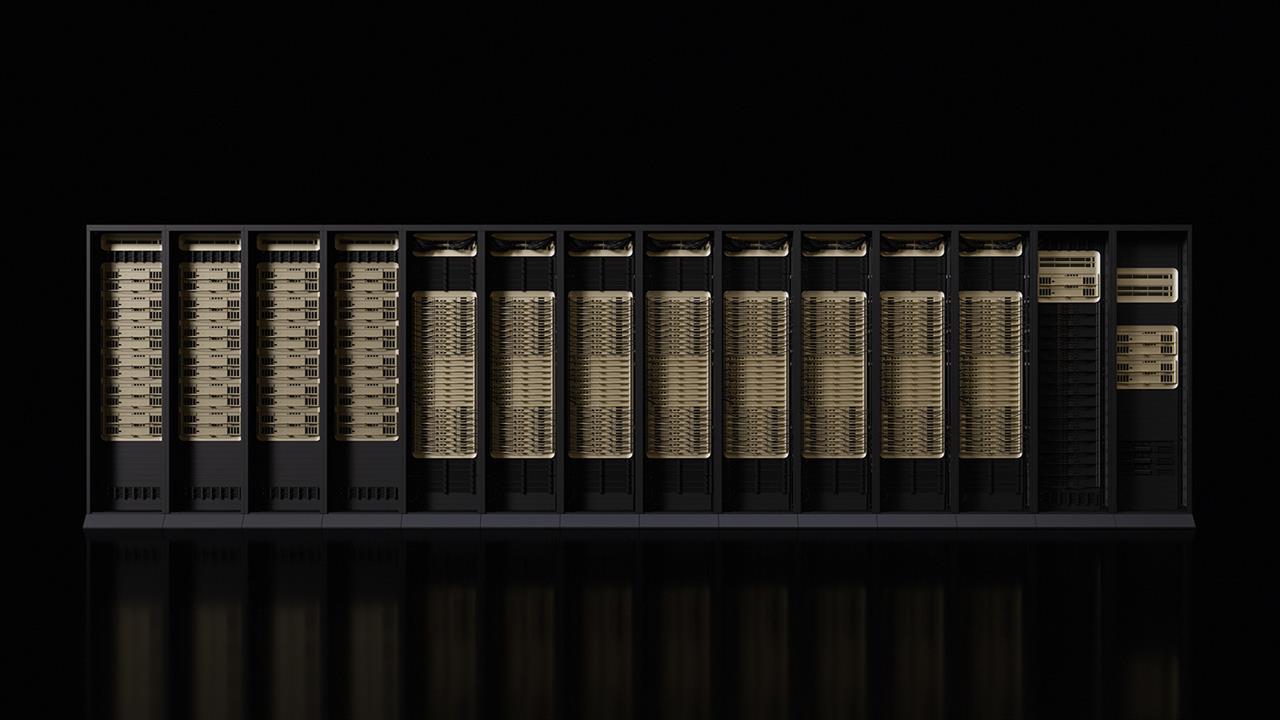
NVIDIA said it's begun producing its next-generation "Vera Rubin" AI chips, a move that will allow the company to deliver its first chips before the end of the year. The company's announcement of a successor to the Blackwell chip came alongside a new self-driving car technology it partnered with Mercedes-Benz to build called Alpamayo, a new AI designed to "think like a human" as it drives, able to handle unusual driving situations in a safe manner.
The new chips, called Vera Rubin, are designed to answer what NVIDIA CEO Jensen Huang called "skyrocketing" demand for computing capabilities. The new chips, named after a famed astronomer who discovered dark matter, combines six chips that handle technologies including data communications, storage and computing tasks.
"It's skyrocketing because models are increasing by a factor of 10, an order of magnitude, every single year," Huang said. Vera Rubin will answer that need by offering five times more computing power than its predecessor, and can move "more data than the global internet" between devices powered by the new technology. "The race is on."
Huang's announcement is part of NVIDIA's latest push to continue its position as the AI industry's leading chipmaker. NVIDIA's processing chips are among the most preferred engines for AI technologies, and the company's CUDA software is used for many AI projects from physics simulations to robotics and more. The resulting global demand for NVIDIA's chips has helped to turn it into the world's most highly valued company, worth more than $4.5 trillion (with a "t.")
Along the way, AI has remade entire industries, including engineering, medicine and art. Huang said money continues to flow into AI investments because much of the world's research and development efforts are turning toward AI, bringing in nearly every industry from manufacturing to medicine.
"Computing has been fundamentally shaped as a result of artificial intelligence," Huang said, adding that technology improvements are accelerating. "Every six months, a new model is emerging, and these models are getting smarter and smarter and smarter."
A better driver
With Alpamayo, NVIDIA said what will help make its technology stand out is a new "physical AI," which can marry video, laser and other technologies to predict road conditions to understand what it needs to do and why. The end result, NVIDIA said, are cars that will be available in the U.S. in the next three months.
"The inflection point of going from non-autonomous vehicles to autonomous is fully here," Huang said while discussing the technology at a keynote press conference at CES 2026 in Las Vegas. "Our vision is that someday, every single car, every single truck, will be autonomous."
At last year's show, NVIDIA CEO Jensen Huang announced the company's then-new RTX 50-series GPUs, built off the company's Blackwell chip technology.
The highlight of the company's announcements was the RTX 5070, which Huang said included AI features that could provide a substantial improvement over the company's previous products. He also touted NVIDIA's chips for laptops that provided more capability while using far less power. “The energy efficiency is off the charts," he said at the time.
Read more: Stay up to date with everything we've seen at CES 2026
More from MC News
- Run AI Locally: The Best LLMs for 8GB, 16GB, 32GB Memory and Beyond
- Quantization Explained: Why the Same LLM Gives Better Results on High-End Hardware
- Why VRAM and Memory Bandwidth are Key for Powering Local AI
- Hands-on with NVIDIA DGX Spark: Everything You Need to Know