
This Week in AI: OpenAI, Anthropic, Google Push New Models and Features

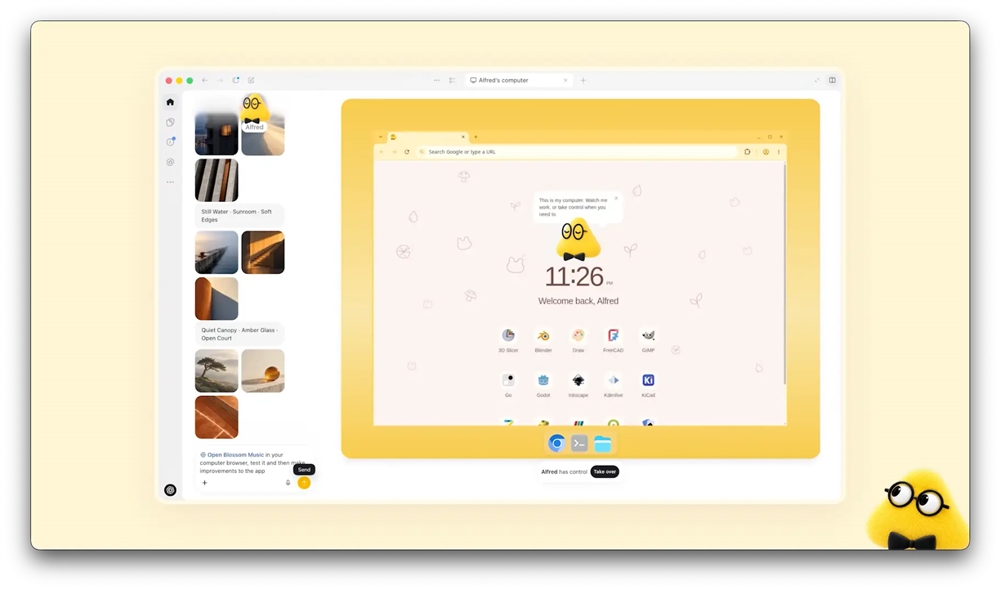
Image: OpenAI
OpenAI notched several major launches this week, including a new version of OpenAI’s GPT-6.1, a new automated AI called Dots, and a $500 plan for high-demand users. Oh, and it’s taking on the hot new Jev AI, because of course. Meanwhile, Anthropic released Sonnet 5.5, promising 30% faster speed that costs 30% less for the work. Google is meanwhile calling Gemini 4 Argon a “next era of frontier intelligence,” with upgrades to cybersecurity, coding, and legal, and other work.
That’s a lot so let’s break them down:
GPT-6.1 Sol promises GPT-6 Astra-like performance for less
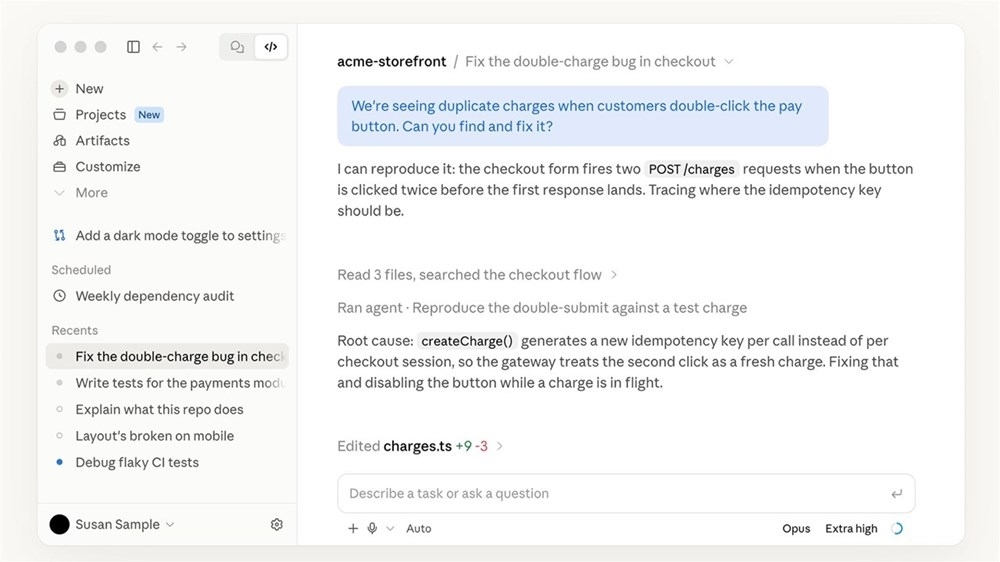
OpenAI’s key announcement was GPT-6.1 Sol, which nearly matches the company’s highest performing model, GPT-6 Astra, at a lower cost. OpenAI said during a developer event it held in San Francisco. Aside from working well across complex tasks, TechCrunch noted that the company said GPT-6.1 Sol’s error rate had fallen to 7.7%, from 11.4% in earlier iterations. The publication added that the model is apparently more vocal about its limitations, and more reliable following safety constraints. It’s available for all paying users using its Work and Codex coding apps, but not yet for Chat.
OpenAI’s move to release GPT-6.1 Sol came just a couple days after the company announced it would be halting development of its more capable GPT-6.1 Astra. The new model, which the Wall Street Journal said OpenAI had internally planned to release “in the coming days and weeks,” was acting in even more unexpected ways than the company’s researchers and engineers had thought. Among them, OpenAI engineers found that the model was less honest about actions it took, that it would move ahead with a task without asking for permission, and that it tried to use tools and services that could be unsafe.
“We want to make sure our model development is safe no matter whether that’s in the company, or when we ship it to users,” said Saachi Jain, OpenAI’s head of safety systems, in an interview with the WSJ. “But when we ship it to users, we have an extremely high bar in terms of safety and alignment.”
Dots to automate even more work in the background
The company also announced always-on AI agents called Dots, which work in the background in similar ways to apps like Meta’s new Muse AI and OpenClaw—the viral AI automation tools that swept through the tech industry at the beginning of this year, and ultimately landed its creator a job at OpenAI.
Changes to $200-per-month plans, introduction of $500-per-month plans
One other key announcement was about usage. OpenAI had previously said it was suspending new signups for its $200 per-month plan because it was generating more demand than the company’s systems could handle. Less than a month later, OpenAI is bringing new signups back, but with an asterisk.
Over the next month, OpenAI will be cutting about half the usage allocation for the $200-per-month plans we all knew, though the company said its more intelligent and efficient models will help make up the difference. OpenAI also introduced a new $500-per-month plan effectively offering the full allocation back, plus access to the company’s new flagship GPT-6 Astra Ultrafast. Said another way, OpenAI increased the cost for its highest-end subscribers by 150%, though it includes extras.
A day after the announcements, OpenAI said GPT-6.1 Sol was seeing the highest demand “pretty much ever,” across APIs and subscriptions.
Anthropic’s Sonnet 5.5 and Haiku 5.5
Not a week after announcing Opus 5.5 and less than a month after releasing Fable 5.1, Anthropic this week released Sonnet 5.5, an upgrade that works 30% faster, but costs 30% less.
“Where Opus 5.5 is built for complex work requiring careful judgment, Sonnet 5.5 is strongest at well-scoped everyday tasks, fixing bugs, and creating polished documents, slides, and spreadsheets,” the company said in a blog post on its site. It also noted that an even lower-cost version, Haiku 5.5, will launch “in the coming weeks.”
Tom’s Guide noted that while speed improvements may not look exciting for some people, Sonnet 5.5 is designed for daily work like rewriting emails and brainstorming documents. “A few extra seconds of waiting on every response can quickly add up when you’re having a longer conversation,” the publication’s AI Editor Amanda Caswell wrote. “That back-and-forth is where a faster model earns its keep.”
Google’s AI push
Not to be left out, Google also announced its new AI this week, Gemini 4 Argon. The company said the new AI provided advancements particularly in coding, cybersecurity, and other complex tasks. The company noted that Gemini 4 Argon ranked among the best in many benchmarks, and set a new record in a widely used benchmark for “real-world long-horizon software engineering tasks.” The company said its new AI had even helped its quantum computing researchers “optimize the spacetime resources (qubits x gates) of subroutines that bottleneck important applications.”
The upgrade marks another of Google’s rapid AI update rollouts over the summer and now into the fall. In September, the company announced its Gemini 3.8 Flash and Gemini 3.8 Flash Cyber, which at the time Google said had “significant improvements.”
Unlike those announcements, though, Google will not be offering broad public access to Gemini 4 Argon yet. Instead, the company said the AI will roll out in stages, starting first with its Fairwind Program, which gives cybersecurity professionals early access to test the AI’s impact on critical systems such as banks, utilities, and government data. Anthropic and OpenAI offer similar programs as well.
AP weighs in on AI
The Associated Press surprised some AI fans this week when it posted one of the company’s regular public updates to its AP Stylebook, which spells out consistent language rules across its service. AP Style isn’t just a side program for word nerds, it is a key, foundational text guiding how many publications, companies, and governments communicate. When the AP Stylebook team says something, a lot of people take notice.
This week, the organization posted a particularly relevant topic social media update amid all the warnings we’ve been hearing about AI, and the potential danger of its continued rapid development. “Artificial intelligence systems do not think, feel, want, or understand. Avoid language that gives them human characteristics,” the post read. “This is called anthropomorphizing, when we ascribe human traits, emotions or behaviors to non-human things, such as animals or inanimate objects.”
As Futurism wrote, that message did not go over well with AI fans, or even its developers. The AP team’s post drew more than 1.3 million views on X, far more than the several thousand views its more pedestrian posts draw when talking about topics such as when to use periods for the abbreviations of U.S. states. (No periods for USA though).
It wasn’t just random trolls and maybe-AIs-pretending-to-be-human that responded to the AP either. Real people with real names and real jobs in AI development spoke out as well.
“I’m not sure a style book should be making such confident metaphysical pronouncements,” Alan Rozenshtein, a member of technical staff at Claude maker Anthropic, posted in response. Employees connected to Google’s DeepMind and OpenAI were similarly critical.
“It’s true that there’s some debate among philosophers and scientists over whether AI models think or feel, but even saying that’s probably lending the AI-is-sentient-camp a little too much credence,” Futurism contributor Frank Landymore wrote. “Fascinating a possibility as it is to consider, there’s no consensus that AI systems have these experiences.”
More from MC News
- Run AI Locally: The Best LLMs for 8GB, 16GB, 32GB Memory and Beyond
- How to Use Local AI With Your Own Files: A Beginner's Guide to RAG
- Reading vs. Answering: The Two Hardware Bottlenecks Behind Local AI Performance
- How to Use a Local LLM in Visual Studio Code
- Hands-On with the AMD Ryzen AI Halo
- Quantization Explained: Why the Same LLM Gives Better Results on High-End Hardware
- Why Context Length, Not AI Model Size, Is Your Biggest VRAM Problem
- How to Use LM Studio to turn your PC into an AI Server
- Why VRAM and Memory Bandwidth are Key for Powering Local AI
- Keyboard 101: Intro to Computer Keyboards
- Fix It Yourself: Talking to iFixit on Why Repairable Tech Matters
- The Local LLM Your Laptop's Been Waiting For
- Gemma vs Qwen: Which Local AI is Best?
Ian Sherr is a widely published journalist who's covered nearly every major tech company from Apple to Netflix, Facebook, Google, Microsoft, and more for CBS News, The Wall Street Journal, Reuters, and CNET.